
Why Construction Dust Keeps Coming Back After Renovation
One of the most frustrating parts of renovation work is discovering that the dust does not disappear after the first clean. Many homeowners vacuum, wipe surfaces, and mop floors repeatedly, only to find a fresh layer of fine dust settling again the next day.
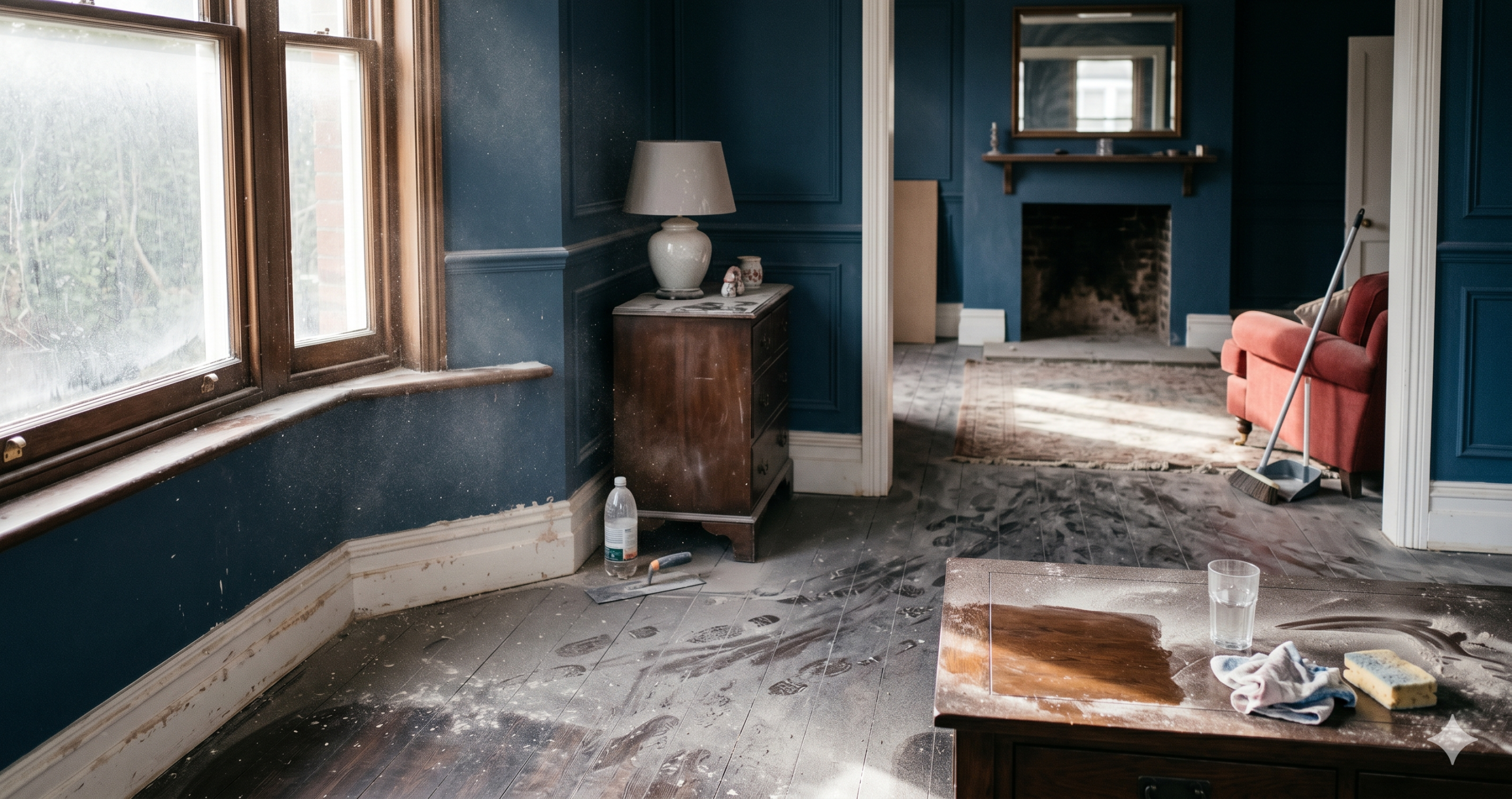
This is extremely common after plastering, sanding, cutting, drilling, or decorating work. Post renovation dust behaves very differently from normal household dust and can continue circulating around the property long after the builders have left.
Understanding why plaster dust after building work keeps returning can help homeowners clean more effectively and avoid spreading the residue further throughout the property.
Why Post Renovation Dust Is Different
Construction dust is much finer than everyday household dust.
Renovation work often produces microscopic particles from:
- Plaster
- Drywall sanding
- Wood cutting
- Tile cutting
- Cement and mortar
- Paint sanding
- Brick and masonry work
These particles are lightweight and easily become airborne again when disturbed by walking, vacuuming, airflow, or even opening doors and windows.
Unlike ordinary dust, plaster residue can settle repeatedly for days or even weeks if it has not been properly extracted from the property.
Dust Settles in Hidden Areas
One reason construction dust keeps returning is because large amounts remain hidden in areas that are not cleaned during standard household routines.
Fine plaster dust often settles:
- Behind radiators
- Inside sockets and switches
- Along skirting board edges
- Inside cupboards and drawers
- Inside carpet fibres
- Behind appliances
- Inside ventilation gaps
- On top of doors and frames
As people move around the property, these particles continue becoming airborne again and resettling across surfaces.
Vacuuming Alone Often Isn’t Enough
Many household vacuum cleaners are not designed to handle large amounts of fine plaster dust properly.
Without proper filtration, very fine particles may pass through the vacuum system and return back into the air.
This is one reason why dust sometimes appears to return immediately after cleaning.
Professional after builders cleaning often uses HEPA-filter vacuum systems because they are designed to trap much finer particles more effectively.
Plaster Dust Easily Spreads Throughout the Property
Even renovation work limited to one room can spread dust throughout the entire home.
Fine particles travel through:
- Air movement
- Foot traffic
- Heating systems
- Open doorways
- Soft furnishings
Carpets, curtains, upholstery, and bedding can all trap construction dust and slowly release it back into the air over time.
This is why rooms far away from the renovation area often still develop visible dust layers.
Cleaning in the Wrong Order Can Make It Worse
Another common issue is cleaning surfaces in the wrong sequence.
If floors are cleaned before upper surfaces, dust from shelves, walls, skirting boards, and fittings will simply fall back down onto the freshly cleaned floor later.
After renovation work, cleaning should generally move from top to bottom:
- Ceilings and light fittings first
- Shelves and upper surfaces
- Walls and skirting boards
- Furniture and lower surfaces
- Floors last
This helps reduce repeated dust settling during the cleaning process.
Soft Furnishings Trap Fine Dust
One of the biggest hidden sources of recurring renovation dust is soft furnishing contamination.
Dust settles deep into:
- Carpets
- Rugs
- Sofas
- Curtains
- Mattresses
- Fabric dining chairs
Walking across carpets or sitting on upholstered furniture can release trapped particles back into the air repeatedly.
This is why extraction cleaning is often recommended after heavy renovation work.
If soft furnishings and carpets have absorbed fine construction residue, professional carpet cleaning services can help remove deeper dust trapped inside carpet fibres.
Moisture Can Turn Dust Into Residue
Many people attempt to wipe plaster dust immediately with wet cloths or mops.
However, fine plaster particles often turn into a chalky paste when mixed with water.
This can create:
- Smearing on floors
- White residue streaks
- Dusty film on surfaces
- Hard-to-remove marks on skirting boards
Dry extraction and HEPA vacuuming are usually needed before damp cleaning begins.
How Long Does Renovation Dust Last?
The amount of time dust continues settling depends on:
- The scale of the renovation
- How much sanding or plastering was involved
- The ventilation inside the property
- Whether carpets and fabrics absorbed dust
- The quality of the initial clean-up
Heavy plastering and sanding projects usually produce the longest-lasting fine dust contamination.
Why Professional After Builders Cleaning Helps
Post-construction cleaning requires a much more detailed process than normal domestic cleaning.
Professional after builders cleaning commonly involves:
- HEPA-filter dust extraction
- Detailed edge and skirting cleaning
- Repeated vacuuming of affected areas
- Removal of plaster and sanding residue
- Cleaning paint splashes and silicone marks
- Dust removal from hard-to-reach surfaces
Without proper extraction cleaning, fine construction dust can continue circulating throughout the home long after the renovation work finishes.
For heavier post renovation dust contamination, booking a professional after builders cleaning service can help remove fine plaster particles and construction residue more effectively.
Final Thoughts
Construction dust keeps coming back after renovation work because fine particles settle into hidden areas, carpets, fabrics, and ventilation gaps throughout the property.
Standard household cleaning often removes only the visible surface dust while deeper residue continues circulating and resettling later.
Using proper HEPA-filter extraction, cleaning from top to bottom, and removing dust from soft furnishings and hidden surfaces all play an important role in reducing recurring post renovation dust inside the home.