
How to Get Rid of Post-Renovation Dust Properly
Renovation work can completely transform a property, but the clean-up afterwards is often far more difficult than people expect. Even smaller decorating projects can leave behind layers of fine plaster dust, construction residue, paint splashes, and debris that continue spreading throughout the property long after the work is finished.
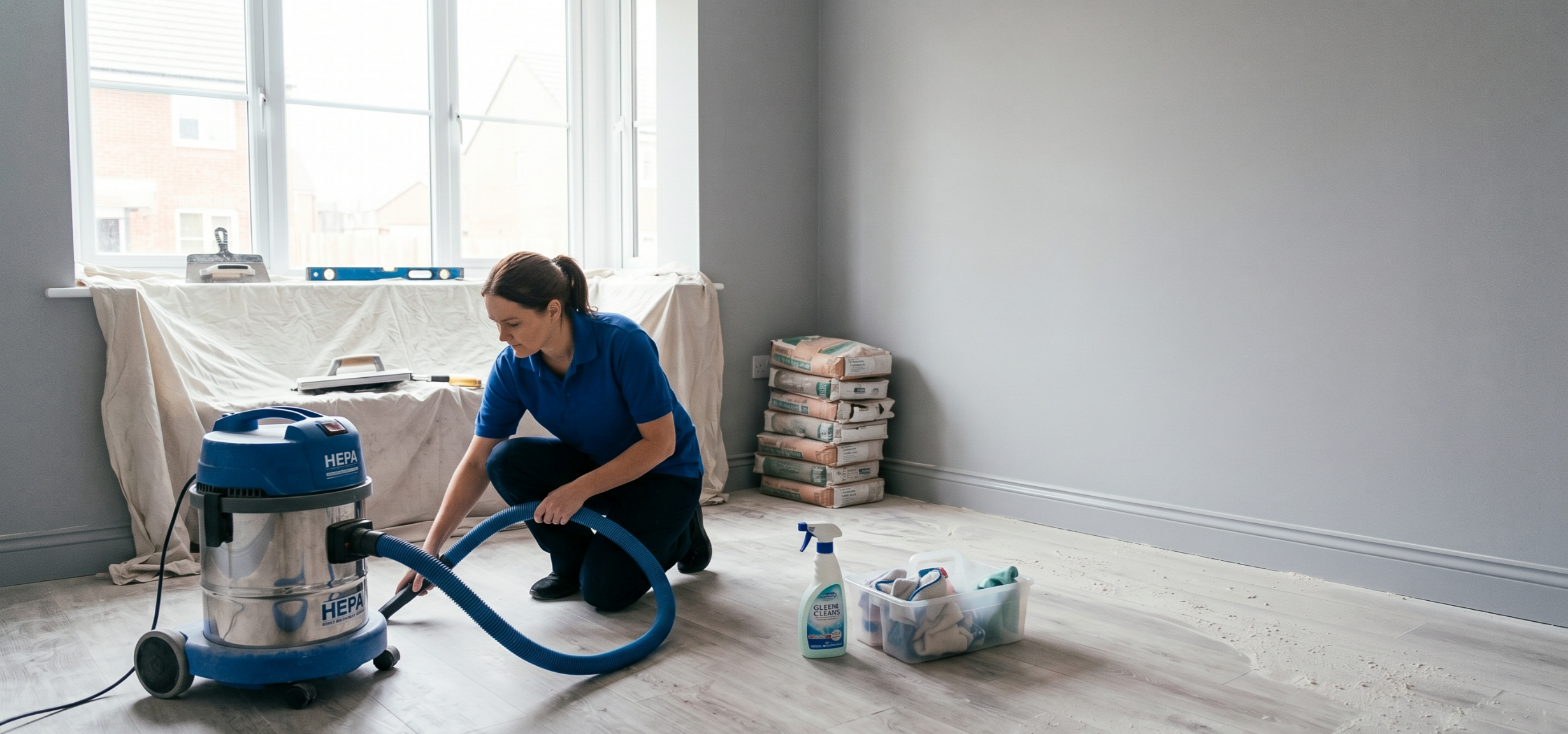
One of the biggest problems with post-renovation dust is how easily it travels. Fine plaster particles settle inside skirting gaps, sockets, vents, fabrics, carpets, and hard-to-reach corners, often continuing to reappear for days after standard cleaning.
Knowing how to clean after renovation work properly can help prevent repeated dust circulation and reduce damage to surfaces around the property.
Why Renovation Dust Is Difficult to Remove
Construction and decorating dust behaves very differently from normal household dust. Fine plaster particles are lightweight and easily become airborne again when disturbed.
Common renovation residue includes:
- Plaster dust
- Sanding residue
- Wood particles
- Paint splashes
- Silicone marks
- Tile dust
- Cement residue
- Sawdust
Plaster dust is particularly problematic because the particles are extremely fine. Standard household vacuum cleaners often struggle to capture it properly and may even spread it back into the air.
Start With Proper Ventilation
Before starting any cleaning, ventilating the property properly is important. Renovation dust settles slowly, especially after sanding, plastering, or cutting work.
Open windows where possible and allow airborne particles to settle before beginning detailed cleaning.
This helps reduce the amount of dust continuously circulating while surfaces are being cleaned.
Remove Large Debris First
Before tackling fine dust, remove larger construction debris and leftover materials from the property.
This may include:
- Packaging materials
- Plastic coverings
- Paint trays and tape
- Wood offcuts
- Broken plaster pieces
- Building rubble
Clearing larger debris first makes it easier to focus on the fine dust left behind on surfaces and floors.
How to Remove Plaster Dust Properly
Many people make the mistake of wiping plaster dust immediately with a wet cloth. This often turns the dust into a paste-like residue that smears across walls, flooring, and skirting boards.
To remove plaster dust properly:
1. Use Dry Dust Removal First
Start by removing as much dry dust as possible before introducing moisture.
This usually involves:
- HEPA-filter vacuuming
- Dry microfibre dusting
- Soft sweeping in controlled sections
HEPA filtration is especially important because it helps trap extremely fine particles instead of redistributing them back into the air.
2. Clean Top to Bottom
Renovation dust settles downward continuously during cleaning.
Always clean in this order:
- Ceilings
- Light fittings
- Shelves and upper surfaces
- Walls and skirting boards
- Furniture
- Floors last
Cleaning floors too early usually means dust settles back onto them again later.
3. Repeat Vacuuming Multiple Times
Post-construction dust often continues settling for several days after renovation work finishes.
Carpets, upholstery, and textured surfaces may need repeated vacuuming before all fine particles are fully removed.
Traffic areas and corners are usually the areas where dust accumulates the most.
Areas Commonly Missed During Renovation Cleaning
Fine dust spreads much further than most people realise.
Commonly overlooked areas include:
- Inside cupboards and drawers
- Door frames and skirting tops
- Electrical sockets and switches
- Radiators and vents
- Behind appliances
- Window tracks
- Curtains and blinds
- Under furniture
Even rooms where no work was carried out can still collect airborne dust during renovations.
How to Clean Floors After Renovation
Floors usually require several cleaning passes because construction dust settles repeatedly.
Hard floors should first be vacuumed thoroughly before damp mopping begins.
Using excessive water too early can spread plaster residue and create visible streaking on some flooring materials.
For carpets, extraction cleaning is often recommended if heavy dust contamination has occurred during renovation work.
Fine dust particles can settle deep into carpet fibres and continue becoming airborne when walked on.
Cleaning Paint Splashes and Silicone Residue
Decorating work often leaves behind paint spots, adhesive residue, or silicone marks on surfaces around the property.
These usually appear on:
- Skirting boards
- Window frames
- Tiles
- Flooring edges
- Glass surfaces
Removing these safely depends on the surface material involved. Aggressive scraping or strong chemicals can sometimes damage finishes or leave scratches behind.
Why Standard Cleaning Often Isn’t Enough
Normal domestic cleaning routines are usually not designed to handle post-construction residue properly.
After renovation work, the property often requires:
- Repeated HEPA vacuuming
- Detailed dust extraction
- Degreasing and residue removal
- Specialist equipment
- Detailed edge and corner cleaning
Without detailed extraction cleaning, fine plaster dust can continue circulating around the property for weeks.
For heavily affected properties, booking a professional after builders cleaning service in Pinner can help remove fine construction dust and renovation residue more effectively.
How Long Does Post-Renovation Cleaning Take?
The cleaning time depends on:
- The size of the property
- The type of renovation work completed
- The amount of sanding or plastering involved
- Whether the property remained occupied during works
- The level of dust spread throughout the home
Plastering and sanding projects generally produce the heaviest fine dust contamination.
Can Renovation Dust Affect Air Quality?
Yes. Fine construction dust can affect indoor air quality, especially in enclosed spaces with limited ventilation.
Very fine particles may continue circulating through the property if not removed properly.
This is one reason why HEPA-filter vacuum systems and detailed extraction cleaning are commonly used during professional post-renovation cleaning services.
Homes with allergy sufferers, children, or pets are often more sensitive to lingering dust after building work.
Final Thoughts
Cleaning after renovation work involves far more than basic vacuuming and wiping surfaces. Fine plaster dust, sanding residue, and construction debris can settle throughout the property and continue reappearing long after the builders leave.
The key to removing post-renovation dust properly is using controlled dry dust removal, HEPA-filter vacuuming, repeated extraction cleaning, and a detailed top-to-bottom cleaning process.
For larger projects or heavy dust contamination, professional after builders cleaning can help restore the property more efficiently and reduce the amount of lingering construction residue left behind.
If the renovation dust has also affected carpets, upholstery, or soft furnishings, combining the clean with professional carpet cleaning services in Pinner can help remove fine particles trapped deep inside fabric fibres.